From “The Chair” to “The Chapter”—what the jargon actually means.
Freemasonry is famous for its history and tradition, but sometimes the language we use can sound like a different dialect. As I prepare to take “The Chair” in 2026, I often get asked what these terms actually mean. Here is a breakdown of the basics— just short simple explanations.
These are the three stages of membership. You can think of them like the stages of life, or levels of university education.
1st Degree (Entered Apprentice): The Student. This degree symbolically represents Youth. The new member is learning the basics, understanding the tools, and figuring out what is expected of him.
2nd Degree (Fellowcraft): The Worker. This degree represents Adulthood. It’s about education, science, and refining your skills. You aren’t just learning anymore; you are applying that knowledge to work on yourself.
3rd Degree (Master Mason): The Mentor. This degree represents Maturity. It is the highest rank in “Craft” Masonry. It focuses on reflection, mortality, and leaving a legacy. Every Freemason, from a new Master Mason to the head of the order, meets on this level.
This is our badge of membership. Historically, stonemasons wore heavy leather aprons to protect themselves from flying stone chips. We wear symbolic aprons (usually made of lambskin or imitation leather) to represent hard work and service. As you progress in rank, the decorations on the apron change to show your status—simple white for an Apprentice, adding rosettes and silver/gold levels as you advance.
Think of him as the President or Chairman of the local branch. He is elected by the members to lead the Lodge for usually one year. His job is to manage the business of the Lodge, preside over the ceremonies, and represent the Lodge externally.
Why “Worshipful”? It’s an old English term meaning “respected” (similar to how we address a Mayor or Magistrate as “Your Worship”). It definitely does not mean we worship him!
A Lodge cannot run with just one person. There is a whole team of officers, each with a specific role. We generally split them into two groups: “Progressive” (those moving up the ladder) and “Regular” (specialists who stay in the role for years).
The Progressive Officers (The Ladder)
Most members start at the bottom of this ladder and work their way up to the Master’s Chair over 6-7 years.
The Wardens (Senior & Junior): The Vice-Presidents. The Senior Warden is effectively the “Master-in-Waiting” for next year. They help the Master run the Lodge and govern the festive board.
The Deacons (Senior & Junior): The Guides. Their main role is to look after the candidate during ceremonies—guiding them around the room and ensuring they are comfortable.
The Inner Guard: The Doorkeeper. He sits just inside the door to ensure only qualified members enter.
The Regular Officers (The Specialists)
The Tyler: The External Security. Historically, he stood outside the door with a sword to keep away eavesdroppers. Today, he still guards the entrance (and usually prepares the candidates before they enter).
The Secretary: The COO / Administrator. He runs the show behind the scenes—handling minutes, summons, and headquarters correspondence.
The Treasurer: The CFO. He manages the accounts, subscriptions, and dining fees.
The Almoner: The Welfare Officer. One of the most important roles. He visits sick members, checks on widows, and ensures everyone is supported in times of distress.
The Charity Steward: The Fundraiser. He coordinates donations and organizes our charitable giving.
The Director of Ceremonies (DC): The Stage Manager. He ensures the meeting runs on time, that everyone knows where to stand, and that the protocol is followed.
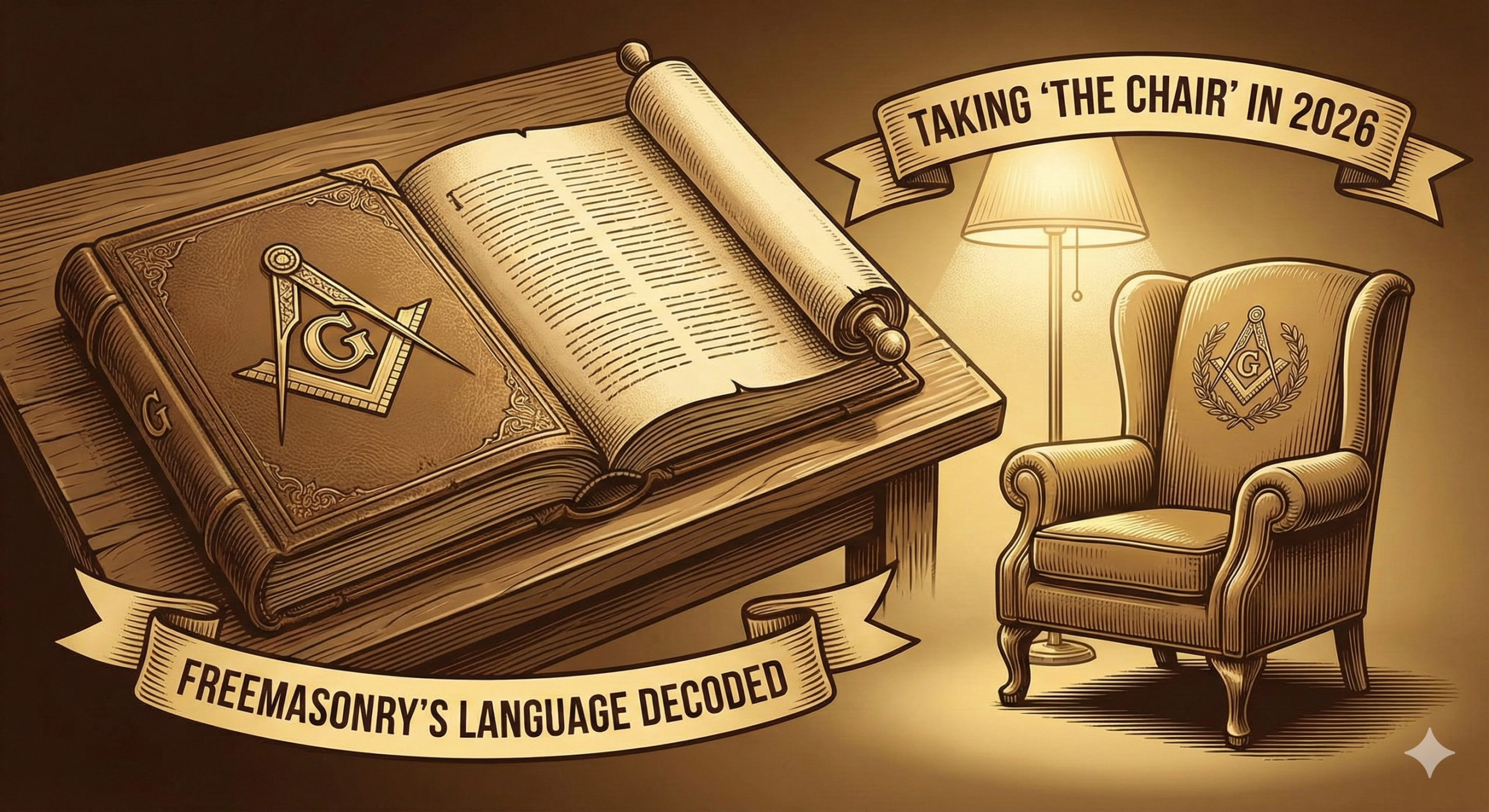
This is simply a metaphor for taking office. When a Mason is installed as the Master, we say he has been placed in “The Chair.” It refers to the physical chair in the East of the Lodge room where the Master sits to preside over the meeting.
You might hear Masons talk about “Chapter.” This refers to the Royal Arch, a separate order that is closely linked to the Craft.
The Connection: If the three degrees are like a Bachelor’s degree, the Royal Arch is like the Master’s degree or the final chapter of a book. It completes the story started in the 3rd Degree.
The Vibe: It is often described as more colourful and historical. Members wear different aprons (red and blue) and meet in a “Chapter” rather than a “Lodge.”
This sounds grand, but it is just the formal dinner we have after our meeting. It’s where the “social” side happens—toasts, speeches, and good food. It’s called a “board” because, in medieval times, tables were often just trestle boards set up for dining.